Kirby not self-propelling: what to check, and when it's the transmission
The self-propel drive is what makes a heavy Kirby easy to push. When it stops, slips or clicks, the cause is either something you can clear at home or wear inside the transmission.
Updated 2026-10-03
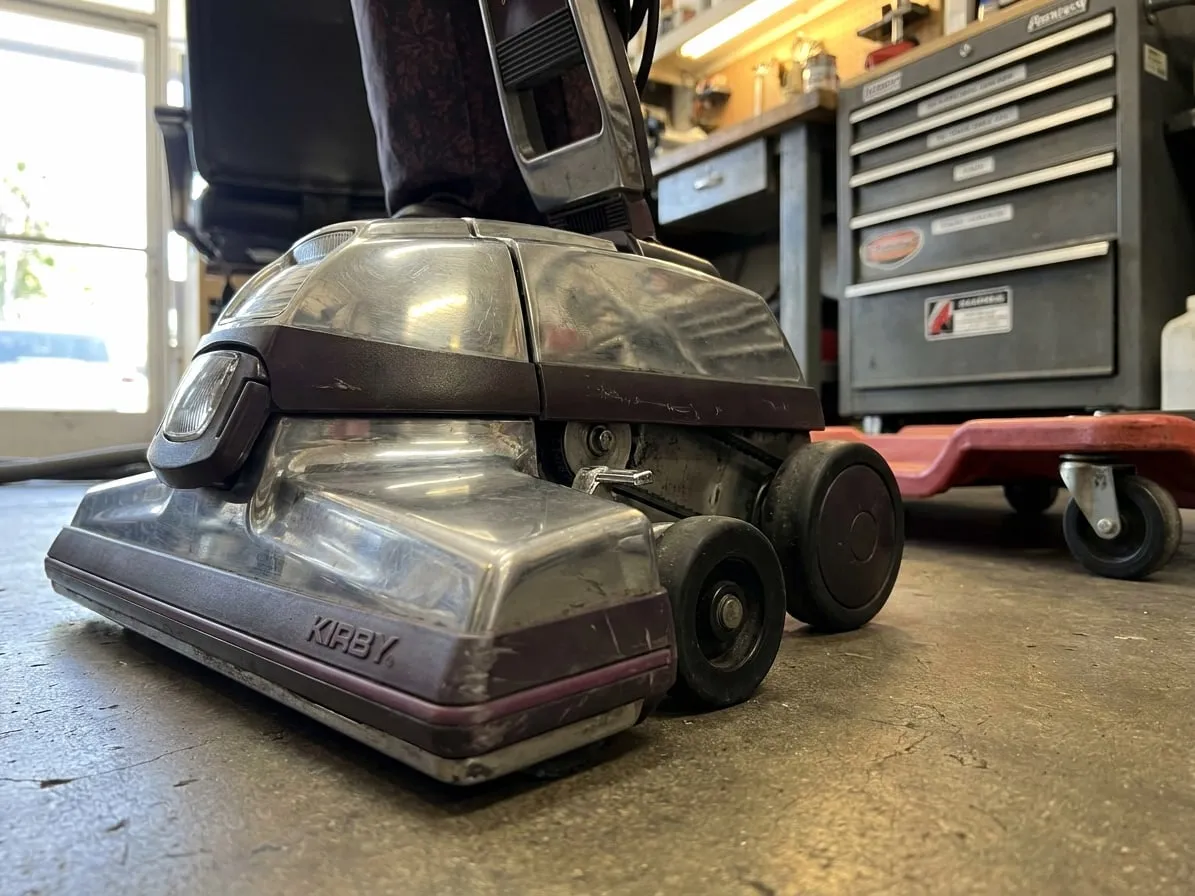
1. Make sure the drive is engaged
Kirby models have a drive control on the handle or the nozzle. Check it is switched to drive, not neutral, and that the nozzle is fully locked onto the machine — a nozzle that is not latched will not drive.
2. Clear the brush roll and belt area
Unplug the machine and turn it over. Remove hair and threads from the brush roll and its ends, and look at the belt. A wrapped brush roll or a belt that has slipped puts extra load on the drive.
3. Listen to it
- Clicking or grinding when the drive is engaged — stripped or chipped gears inside the transmission.
- Drives a little, then slips — worn drive parts or old, dried grease.
- Motor runs, no drive at all, no noise — a broken part in the transmission or its linkage.
All three are inside the transmission, which has to come out of the nozzle to repair.
What the repair is
On the bench the transmission is removed, opened, cleaned, the worn parts are replaced and it is re-greased — or swapped for a rebuilt unit when the case itself is damaged. Our drive repair is $349 with the parts and a full tune-up included, shipping both ways. If the machine is tired overall, a full rebuild ($449) is usually the better buy.
Tried all of that?
Then the fault is inside the machine. Send it to our bench: free estimate, prepaid shipping both ways, 7–12 days door to door.